[et_pb_section fb_built="1" _builder_version="4.21.0" _module_preset="default" global_colors_info="{}" theme_builder_area="post_content"][et_pb_row _builder_version="4.21.0" _module_preset="default" global_colors_info="{}" theme_builder_area="post_content"][et_pb_column type="4_4" _builder_version="4.21.0" _module_preset="default" global_colors_info="{}" theme_builder_area="post_content"][et_pb_text _builder_version="4.27.2" _module_preset="default" hover_enabled="0" global_colors_info="{%22gcid-3cf13b05-441f-4a04-90d1-eafe4f681c6e%22:%91%22header_4_text_color%22%93}" theme_builder_area="post_content" sticky_enabled="0" header_4_text_color="gcid-3cf13b05-441f-4a04-90d1-eafe4f681c6e"]
In the world of network management, understanding the fundamental protocols that govern communication is crucial. Internet Protocol (IP) is the backbone of data transfer across networks, and currently, there are two main versions in use: IPv4 and IPv6. In this article, we will explore the differences between these two protocols and delve into why IPv4 is still predominantly used for internal networks, despite the emergence of IPv6 as the successor.
Understanding IPv4 and IPv6:
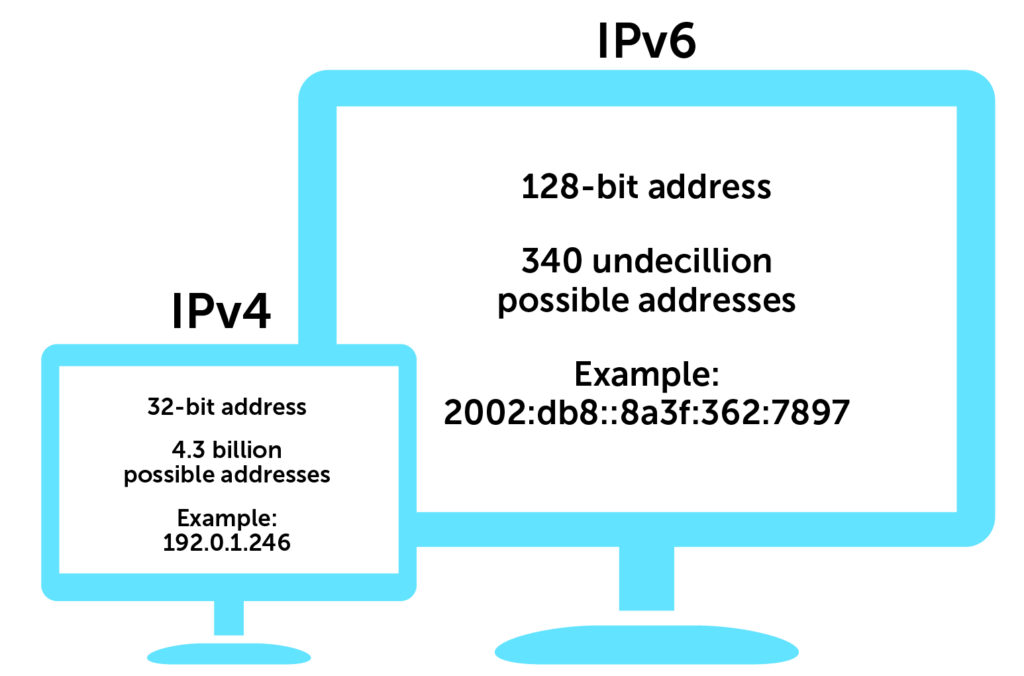
IPv4 (Internet Protocol version 4) is the fourth revision of the Internet Protocol, which was the first widely used protocol for packet-switched networks. It uses a 32-bit address space, allowing for approximately 4.3 billion unique addresses. However, with the explosive growth of the internet and the proliferation of devices, this limited address space has become a significant constraint.
IPv6 (Internet Protocol version 6), on the other hand, was designed to address this issue. It employs a 128-bit address space, providing an astronomical number of unique IP addresses (approximately 3.4 x 10^38). Additionally, IPv6 incorporates several enhancements, such as improved security, better support for mobile networks, and more efficient packet processing.
Why IPv4 is Used for Internal Networks:
1. Legacy Infrastructure: Many internal networks and devices have been built using IPv4, and transitioning to IPv6 requires significant effort and resources. Legacy systems, applications, and network equipment may not be compatible with IPv6, making the transition complex and costly for organizations.
2. Addressing Convenience: Despite the limited address space of IPv4, it often suffices for internal networks. Private addressing schemes, such as Network Address Translation (NAT), allow organizations to reuse private IP addresses internally, effectively extending the available address pool. This practice enables efficient use of IPv4 addresses within private networks.
3. Service Provider Support: While IPv6 adoption is growing, not all internet service providers (ISPs) offer native IPv6 connectivity to their customers. This limitation makes it challenging for organizations to adopt IPv6 for their internal networks, as they may require both internal and external connectivity using the same protocol.
4. Security Considerations: IPv4 networks have been in use for decades, allowing network administrators to gain extensive experience and expertise in managing and securing these networks. IPv6, being a relatively newer protocol, requires additional security measures and may pose unfamiliar challenges to network administrators.
While IPv6 brings numerous advantages in terms of scalability and functionality, IPv4 remains the dominant protocol for internal networks due to legacy infrastructure, addressing convenience, limited service provider support, and the familiarity of network administrators with IPv4 security measures. However, as the exhaustion of IPv4 addresses continues to loom, organizations must gradually prepare for the transition to IPv6, ensuring their networks can adapt to the future requirements of a connected world.
[/et_pb_text][/et_pb_column][/et_pb_row][/et_pb_section]