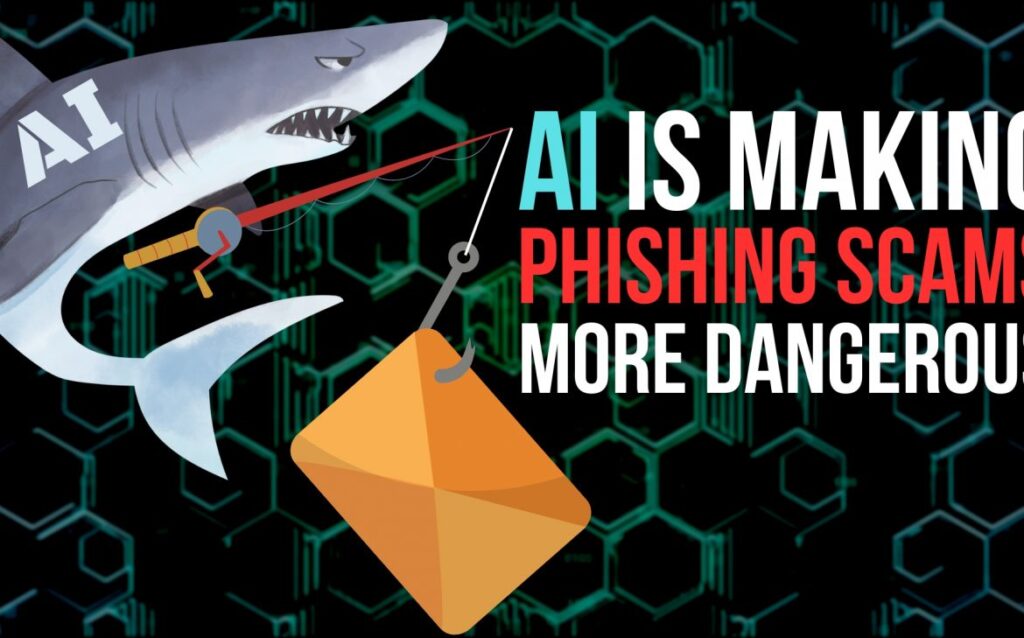
Artificial intelligence (AI) has made considerable advances in recent years, with chatbots being at the forefront of this revolution. From answering simple questions to cracking jokes, chatbots have become increasingly popular among people looking for some fun and entertainment. However, cybercriminals have been quick to exploit the potential of AI and use it for more sinister purposes.
Phishing scams are one of the most common types of cyberattacks. They often involve an attacker impersonating a trusted entity to trick victims into revealing sensitive information such as login credentials, credit card details, or personal data. While there are several telltale signs of phishing attacks, such as spelling mistakes, grammatical errors, or suspicious links, cybercriminals have now found a way to make their phishing scams harder to detect using AI chatbots.
By using AI-powered chatbots, criminals can create phishing emails that look and feel more human than ever before. They can generate unique variations of the same phishing lure, making it harder for security tools to detect them. They can also eliminate spelling and grammatical errors, which are often the telltale signs of phishing emails. Moreover, they can create entire email threads that make the scam more plausible and credible.
The fact that cybercriminals are using AI to power their phishing scams means that you need to be even more cautious when opening emails. While it's always been good advice to read emails carefully, look for errors, and ensure that the message is legitimate before clicking any links, the use of AI chatbots has made this advice even more critical. Since the phishing emails generated by AI chatbots feel more human than ever before, it's easier for people to fall for the scam and give away sensitive information.
One way to protect yourself against phishing attacks is to be more vigilant when checking the email address the message is sent from. Criminals often use fake email addresses that resemble those of legitimate organizations to trick people into thinking that the message is genuine. Therefore, it's essential to check the sender's address carefully and look for any subtle differences or discrepancies that may indicate that it's a phishing email.
Another way to protect yourself is to double-check with the sender (not by replying to the email!) if you have any doubts about the authenticity of the message. If you receive an email that appears to be from your bank or other financial institution, for example, but you're not sure if it's genuine, it's always a good idea to call the bank directly and ask them to verify the message.
In addition to being more cautious when checking emails, you can also take advantage of some of the security tools available to help protect against phishing attacks. Although tools to detect messages written by AI are still in development, there are several security solutions that can help you detect phishing scams before they cause any harm.
For example, anti-phishing software can scan incoming emails for phishing attempts and flag any suspicious messages. These tools use machine learning algorithms to analyze the email's content, metadata, and other features to identify phishing attacks accurately. They can also block malicious URLs and other threats, reducing the risk of falling for the scam.
Another security solution to consider is two-factor authentication. This security feature requires you to provide two types of identification before accessing sensitive data or performing critical operations. By requiring a password and a secondary verification method, such as a fingerprint or a one-time code sent to your phone, two-factor authentication makes it much harder for cybercriminals to steal your data or perform unauthorised activities.
In conclusion, while AI chatbots have brought a lot of fun and entertainment to people, cybercriminals have found ways to use this technology for more sinister purposes. By using AI to power their phishing scams, they can create convincing emails that are harder to detect, making it easier for them to trick people into giving away sensitive information.
This is why Cyber Security is so important for your business! If you require any assistance in Cyber Security training your staff and keeping your business safe from cybercriminals, please don't hesitate to Contact Us.